
- All
- Product Name
- Product Keyword
- Product Model
- Product Summary
- Product Description
- Multi Field Search

Views: 0 Author: Site Editor Publish Time: 2026-03-12 Origin: Site


Many VSI crushers look similar from the outside, but their results can differ sharply in daily use. That is why operators and buyers pay close attention to vsi crusher components. In this article, you will learn which parts affect output, wear, maintenance, and buying decisions in sand making, quarrying, and aggregate production.
A VSI crusher does not rely on one single wear part to make shaped product. It works as a coordinated system in which the rotor accelerates the feed, the feed system positions material correctly, and the chamber components absorb impact while protecting the machine body. In practical terms, operators care about these parts because even a small change in one area—such as a worn distributor plate or a damaged cavity wear plate—can change throughput, increase vibration, or reduce particle shape quality. The rotor is the machine’s functional center, with material accelerated to very high velocity before it enters either a rock-on-anvil or rock-on-rock crushing path.
The rotor is the heart of the machine because it generates the speed and force that make VSI crushing possible. Once feed enters the rotor, it is accelerated and discharged outward at high velocity, which creates the impact energy needed for shaping and size reduction. The rotor assembly usually includes rotor tips, back-up tips, upper and lower wear plates, cavity wear plates, and, in some configurations, trail plates that help maintain a protective material build-up inside the rotor. Rotor tips are the last parts to contact the material before discharge, so they have a direct effect on crushing efficiency and the consistency of the final cubical product. Back-up tips do not perform the main crushing duty, but they protect the rotor body if the primary tips wear down too far. Meanwhile, upper and lower wear plates protect the inner rotor surfaces, and cavity wear plates shield outer rotor edges from rebounding particles.
One useful way to think about rotor parts is by task rather than by location:
● Energy transfer parts: rotor tips and related discharge-edge parts
● Rotor protection parts: back-up tips, cavity wear plates, upper and lower wear plates
● Flow-stabilizing parts: trail plates and internal surfaces that help maintain material movement inside the rotor
This division matters because not all rotor wear causes the same problem. Tip wear usually shows up first in product shaping and crushing action, while internal plate wear more often threatens rotor integrity and service life.
Before material can be crushed properly, it has to enter the rotor correctly. That is why the feed tube, feed eye area, and distributor-related parts matter more than many buyers first assume. The feed tube guides material from the hopper into the rotor center, while the feed eye ring helps protect the entry zone and keep feed aligned. The distributor plate then spreads incoming material across the rotor outlets so the machine can work evenly rather than loading one side more than the other. When these parts are worn, the problem is not only wear itself; it is poor feed presentation. Uneven entry causes localized abrasion, unstable balance, and inconsistent shaping, especially at high rotor speeds. Feed size, moisture, and feeding method can also change wear behavior, and cascade feeding can alter gradation and shape because some material bypasses the rotor path.
Component group | Primary role inside the VSI | What happens if wear is ignored |
Rotor tips and internal rotor wear parts | Accelerate feed and protect the rotor during high-speed discharge | Lower crushing efficiency, poorer shape, risk to rotor body |
Feed tube, feed eye ring, distributor plate | Center and distribute feed for balanced operation | Uneven wear, imbalance, inconsistent output |
Chamber liners, anvils, rock shelf, cavity protection parts | Provide impact surface and shield the housing from damage | Rising chamber wear, higher maintenance load, reduced stability |
After leaving the rotor, the material enters the crushing chamber, where chamber protection parts determine both wear pattern and crushing path. In a rock-on-anvil setup, anvils provide a hard impact surface around the chamber. In a rock-on-rock configuration, a rock shelf or material lining forms a self-protecting impact wall that reduces direct metal wear. Wear plates, side liners, and cavity protection parts shield the housing from material ejection and repeated impact. This is why chamber components should not be seen as passive liners. They support the crushing action initiated by the rotor, influence maintenance intervals, and help the machine keep a stable operating condition under abrasive feed.
In a VSI crusher, not all parts wear at the same pace. The first components to show noticeable loss are usually the ones that face direct abrasion, repeated high-speed impact, or concentrated material flow. Rotor tips sit at the discharge edge of the rotor and are the last metal contact point before material is thrown into the crushing chamber, so they are naturally among the fastest-wearing parts. Distributor plates are also heavily exposed because they take the first hit from incoming feed and spread it across the rotor. Feed tubes and feed eye areas wear more gradually in some applications, but they can deteriorate quickly when feed is oversized, abrasive, or poorly centered. Around the chamber, cavity wear plates, anvils, side liners, and related protection parts also take sustained punishment from rebounding particles and repeated impact. These parts act as the main wear cycle drivers because they sit directly in the machine’s highest-energy zones.
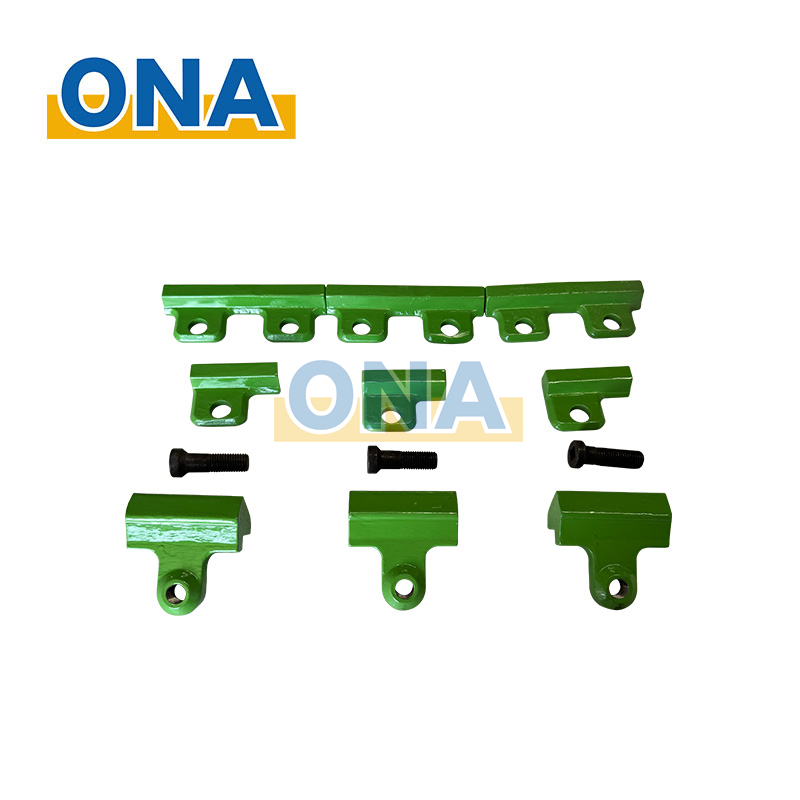
What makes these parts especially important is not only that they wear first, but that they shape how the rest of the machine behaves afterward. Once rotor tips lose profile, the crusher may still run, but the energy transfer becomes less consistent. If the distributor plate wears unevenly, feed no longer enters the rotor in the same balanced way. Chamber parts such as anvils or rock-facing protection surfaces then begin receiving impact in a different pattern, which can shift wear further downstream. In demanding crushing applications, this is why wear does not stay isolated to one part: the earliest-wearing components often determine the service rhythm of the whole machine.
Component area | Why it wears early | Typical production effect |
Rotor tips and back-up tip zone | Direct high-speed contact with accelerated feed | Less efficient breakage and weaker particle shaping |
Distributor and feed entry parts | Constant feed impact and uneven loading risk | Inconsistent material distribution through the rotor |
Chamber protection parts such as anvils or wear plates | Repeated strike from discharged and rebounding material | Unstable chamber behavior and rising wear exposure |
Wear life changes significantly from one site to another because the machine does not crush under fixed conditions. Feed size matters because larger material hits entry and rotor parts more aggressively. Material hardness and abrasiveness influence how quickly metal surfaces lose thickness, while moisture changes how feed moves through the center of the rotor and chamber. Rotor speed also matters because faster rotation produces more fines and more impact energy, but that added energy usually increases wear. Application type changes the picture as well. A VSI used for sand production may show different wear behavior from one used for ore crushing or aggregate shaping, even when the base machine is similar. Rock-on-rock arrangements can lower direct metal wear in some cases, while rock-on-anvil configurations may concentrate impact more intensely on hard surfaces.
As these parts wear, the first signs usually appear in the product rather than in a complete stoppage. Particle shape may become less cubical, fines generation may drift away from target, and throughput can become less stable from shift to shift. Uneven feed entry or worn rotor discharge parts can also increase vibration because the crushing action is no longer balanced in the same way. In severe cases, the machine still runs but with lower crushing efficiency, meaning more energy is spent for less consistent output.
A VSI crusher’s maintenance burden is shaped as much by component design as by wear rate. Two machines may deliver similar output, yet require very different amounts of labor to keep running if their internal parts are arranged differently. Access to the rotor, distributor plate, feed tube, cavity wear plates, and chamber liners determines how quickly operators can inspect wear, confirm balance, and replace damaged parts. Some rotor designs are supplied as fully dressed assemblies or use reversible wear surfaces, which can shorten service time and reduce exposure to unplanned downtime. In the same way, layouts that make it easier to remove worn feed parts or replace matched rotor components help maintenance stay routine rather than disruptive.
Service time is not only about how many parts wear out. It is also about how many steps are required to reach them, remove them, and return the machine to a balanced condition. A distributor plate mounted in an easy-to-access position is faster to inspect than one buried deep in the rotor area. Feed tubes that are designed for straightforward changeout reduce lost hours during scheduled stops. Rotor parts add another layer of complexity because balance matters: high RPM operation requires careful replacement practice, especially when wear parts on opposite sides of the rotor must be changed together to avoid vibration or bearing damage. That is why design choices such as weight-matched wear parts, protected access points, and simplified internal layout have a direct effect on maintenance workload.
Design factor | Maintenance impact | Cost effect |
Easy access to rotor and feed components | Shorter inspections and faster changeout | Lower labor time and less downtime |
Matched or balanced wear-part design | Reduced vibration risk during replacement | Lower chance of bearing or rotor damage |
Reversible or longer-life wear surfaces | Fewer stoppages across the wear cycle | Lower operating cost per ton |
Part price is only the visible cost. The wider operating picture includes how often rotor tips, distributor plates, feed tubes, and chamber protection parts must be replaced, how many labor hours each stop consumes, and how much production is lost while the crusher is offline. Running wear parts too long can also trigger secondary costs, especially when excessive wear affects rotor integrity, feed distribution, or balance. In that case, what begins as a routine wear-part expense can develop into a larger repair event with higher downtime and a heavier daily maintenance burden.
Evaluating VSI crusher components is not only about identifying which parts fit the machine. It is about understanding which component choices will affect uptime, wear cost, product quality, and long-term operating stability. For buyers, that means comparing rotor design, wear part arrangement, chamber protection layout, and service accessibility rather than focusing only on the initial purchase price. For operators, it means knowing which parts have the greatest influence on day-to-day production and which changes in those parts are most likely to show up in output consistency. Rotor assemblies, feed components, and chamber protection parts all work together, while application variables such as feed characteristics and crushing mode change what “best” really means in practice.
During machine or supplier evaluation, the closest attention should go to the rotor assembly, the arrangement of high-wear parts, the chamber protection design, and how easily those parts can be accessed for inspection or replacement. A well-designed rotor is not just a rotating core; it is the part that controls material acceleration, particle shaping, and balance at high speed. Wear part arrangement matters because some setups make it easier to replace matched components, preserve rotor balance, and avoid secondary vibration issues. Chamber protection design matters for the same reason: rock-on-anvil and rock-on-rock layouts do not create the same wear pattern or maintenance burden. This is why buyers comparing suppliers such as Ma' Anshan ONA Intelligent Equipment Co., Ltd. should look beyond catalog descriptions and ask how the supplied parts support real operating conditions such as sand making, ore crushing, or aggregate production.
Operators do not need to watch every component with the same level of urgency. The most sensitive checkpoints are usually the rotor tips, distributor plate, feed tube, feed eye area, and the chamber protection surfaces that receive direct impact or rebounding material. These are the parts most likely to affect production stability first. If the distributor begins to wear unevenly, feed presentation changes. If rotor tips lose profile, particle shaping and crushing efficiency begin to drift. If chamber protection parts wear too far, impact behavior inside the crusher becomes less predictable. The point of routine monitoring is not only to detect damage, but to catch the parts most likely to change output quality before a larger production problem develops.
Evaluation focus | Why it matters | Best suited for |
Rotor assembly design | Affects acceleration, balance, and product shaping | Buyers comparing long-term machine value |
Feed and distributor components | Influence material flow and wear concentration | Operators checking production stability |
Chamber protection layout | Changes wear pattern and maintenance burden | Both buyers and operators |
The right component setup always depends on the production target. A configuration used for sand making may prioritize tighter particle shape and controlled fines generation, while aggregate shaping may require a different balance between throughput and wear life. Feed material matters just as much. Hard, abrasive stone places different demands on the rotor assembly and wear-part package than softer or less abrasive feed. Crushing mode matters too: rock-on-rock designs can reduce direct metal wear in some applications, while rock-on-anvil setups may suit other output goals. That is why component selection should be tied to feed material, desired gradation, and product purpose rather than to generic claims about part quality alone.
Understanding VSI crusher components helps operators protect output and helps buyers judge long-term value more accurately. By knowing how key parts work, which ones wear fastest, and how design affects maintenance, readers can make better decisions. Ma' Anshan ONA Intelligent Equipment Co., Ltd. adds value with reliable wear-part solutions and practical support for demanding crushing applications.
A: The fastest-wearing vsi crusher components are usually rotor tips, distributor parts, feed tubes, and chamber liners.
A: Vsi crusher components affect cost through wear rate, replacement frequency, downtime, and the risk of secondary damage.
A: Operators should monitor vsi crusher components that directly affect balance, feed distribution, and particle shape.
A: Buyers should compare vsi crusher components by application fit, maintenance access, and expected wear life.


