
- All
- Product Name
- Product Keyword
- Product Model
- Product Summary
- Product Description
- Multi Field Search


A VSI crusher can change ordinary rock into high-quality sand and better-shaped aggregate. That matters when concrete, asphalt, or road materials must meet stricter standards. In this article, you will learn how a VSI crusher works, where it fits in production, what makes it different, and why VSI crusher parts affect performance.
A VSI crusher, or vertical shaft impact crusher, is a machine used mainly in the final stages of a crushing circuit to improve particle shape and produce finer, more uniform material. Instead of taking large run-of-quarry rock as a primary crusher would, it typically handles already reduced feed from upstream equipment and refines it into shaped aggregate or manufactured sand. In practical terms, its job is not simply to make rock smaller, but to make the final product more usable for concrete, asphalt, road base, and other quality-sensitive applications.
This role is especially important in plants where the end product must meet tighter requirements for gradation and particle shape. A producer may already have enough crushing power from jaw or cone crushers, yet still need a VSI crusher to deliver a more cubical, consistent output. That is why the machine is often associated with shaping as much as crushing.
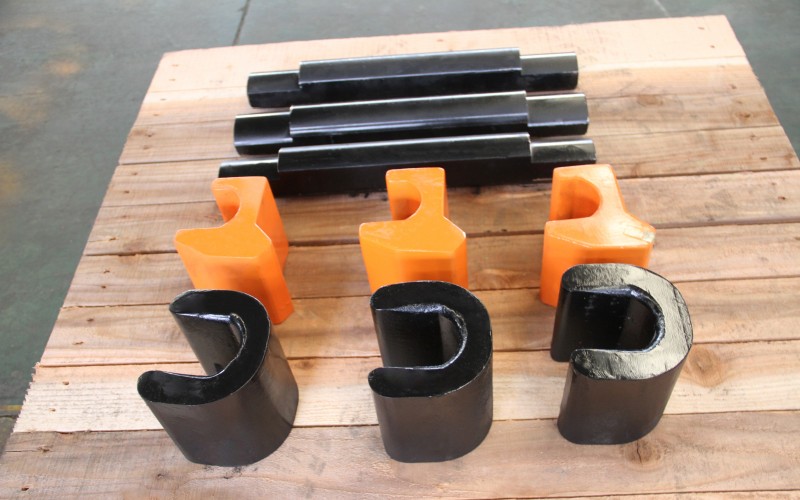
What sets a VSI crusher apart is its crushing method. Rather than squeezing material between two surfaces, it uses a high-speed rotor to accelerate particles and throw them into a crushing chamber, where they strike other material or hard wear surfaces. This impact-based process breaks rock along natural fracture lines, which is one reason the finished product tends to have a better shape than material produced by compression-only crushing methods.
Because the crushing force comes from velocity, the machine is particularly effective when a plant needs fine, well-graded output instead of just coarse reduction. Rotor speed, chamber design, and feed condition all influence how much shaping and size reduction take place, giving operators a practical way to tune output for specific end uses.
Producers usually choose a VSI crusher when the market demands more than simple tonnage. In many aggregate operations, the value of the final product depends heavily on shape, consistency, and sand quality. A VSI crusher supports those goals by delivering:
● Better-shaped aggregate for concrete and asphalt mixes
● More consistent particle gradation for controlled production
● High-quality manufactured sand where natural sand is limited
● Greater flexibility when a plant needs both shaping and fine crushing
In other words, a VSI crusher is selected when output quality directly affects product performance, specification compliance, or selling value.
A VSI crusher works by turning incoming rock into high-velocity particles and using impact, rather than compression, to break them down. Material enters the machine through the feed opening and moves toward the center of a rapidly spinning rotor. Once inside, the rotor accelerates the feed outward at very high speed and discharges it into the crushing chamber. There, the material hits either a wear surface or other particles already moving within the chamber. This high-energy collision is the core of the crushing process.
What makes this process especially useful is the way the rock breaks. Instead of being squeezed into irregular fragments, the particles tend to fracture along natural weakness lines when they are struck at speed. After the first impact, the material continues to collide with other particles and chamber surfaces, which further reduces size and improves shape. That repeated action is why a VSI crusher is widely used when the target is not just smaller material, but a more cubical and consistent final product for sand or aggregate applications.
Two common operating concepts help define how a VSI crusher performs: rock-on-rock and rock-on-steel. In a rock-on-rock setup, the accelerated material strikes a bed of accumulated material rather than directly hitting metal surfaces. This approach is often preferred for abrasive feed because it lowers wear on internal components and is well suited to shaping applications where product form is a priority. It can be especially useful when producers want better particle shape without driving wear costs too high.
In a rock-on-steel setup, the material impacts metal anvils or other hard wear surfaces inside the chamber. This arrangement usually creates a stronger crushing action and can generate higher reduction and more fines in suitable feed conditions. It is often selected when the goal is more aggressive size reduction, especially with less abrasive material. The trade-off is that wear on internal parts may increase compared with rock-on-rock operation.
The final output of a VSI crusher depends on how these variables work together in actual production. Even when the same machine is used, changes in feed condition, rotor setting, or chamber arrangement can shift the balance between shaping, reduction, and capacity. That is why operators treat the VSI crusher as a controllable finishing machine rather than a simple one-step crusher.
A VSI crusher performs best in applications where the quality of the final product matters as much as the reduction process itself. It is especially valuable in sand making because it can turn properly sized feed into manufactured sand with more consistent gradation and a better particle profile. Instead of producing a high share of flat or elongated fragments, it is used to create more cubical material, which is important when the end product must meet tighter quality requirements.
This makes the VSI crusher a strong fit for concrete production, asphalt mixes, and road construction. In concrete, better-shaped aggregates can improve packing and support a more workable mix. In asphalt and road base applications, consistent shape and gradation help create materials that perform more reliably in placement and compaction. For producers supplying infrastructure projects, the VSI often serves as the stage where crushed rock becomes a specification-ready product rather than just smaller stone.
The machine is commonly used with materials such as granite, basalt, limestone, river gravel, and selected recycled feed, provided that the material has already been reduced to a suitable size before entering the crusher. Each material behaves differently under impact, so plant performance depends not only on the machine itself but also on the characteristics of the feed. Hard, abrasive rock may still be processed effectively, but wear behavior and chamber setup become more important in those conditions.
A VSI crusher is not always the best answer in every crushing circuit. It is less suitable when feed is too large for efficient rotor entry, when material is sticky enough to disrupt flow, or when contamination creates operating instability. It is also a poor fit for plants focused mainly on primary crushing, where the goal is to reduce large rock quickly rather than refine shape. In operations where bulk tonnage matters more than sand quality or aggregate form, other crushers may be more practical.
A jaw crusher and a VSI crusher are designed for very different jobs in a crushing plant. A jaw crusher is typically used at the front of the process, where large feed material must be reduced into a manageable size for downstream equipment. Its strength is primary reduction: taking coarse rock and breaking it into smaller pieces through compression between two jaw plates. That makes it essential for the first stage of many crushing circuits, but it does not usually deliver the particle shape needed for higher-value end products.
A VSI crusher, by contrast, is normally used later in the process when the feed has already been reduced. Its role is to refine, shape, and further reduce material through high-speed impact rather than compression. In practical terms, a jaw crusher answers the question, “How do we break large rock down?” while a VSI crusher answers, “How do we turn crushed material into a better final product?” This is why the two machines are often complementary rather than interchangeable.
The comparison between a cone crusher and a VSI crusher is closer, because both are commonly used after the primary stage. Even so, they work on different principles and produce different outcomes. A cone crusher relies on compression, squeezing material between a moving cone and a fixed surface. This makes it effective for secondary or tertiary reduction where capacity and controlled size reduction are major priorities. It is widely used when producers need to process hard material efficiently into aggregate-sized output.
A VSI crusher uses impact energy instead. Material is accelerated by a high-speed rotor and then broken by striking other material or wear surfaces inside the chamber. Because of this method, it is better suited to final shaping and manufactured sand production. Where a cone crusher is often chosen to reduce material to a smaller aggregate size, a VSI crusher is preferred when the plant needs finer output, improved cubical shape, and better gradation control.
The right choice depends less on machine category alone and more on production goals. A VSI crusher is often the better fit when feed is already within a suitable size range, the target product requires good shape, and the end use places value on consistent fines or shaped aggregate. If the plant’s priority is simply reducing large rock as quickly as possible, another crusher may be more appropriate. If the goal is to improve the quality and market value of the finished material, a VSI crusher becomes much more compelling.
The performance of a VSI crusher depends heavily on how its main working components interact under load. The rotor is the core of the machine because it accelerates material and largely determines the intensity of crushing. Just as important is the feed system, which must deliver material evenly into the rotor to keep the machine stable and productive. Inside the crushing chamber, wear plates, anvils or a rock shelf, and internal liners help control how material impacts and moves through the machine. Smaller but critical components such as tips, shoes, and bearings also affect efficiency, balance, and service life. When operators talk about maintaining reliable output, they are often really talking about the condition of these VSI crusher parts and how well they match the application.
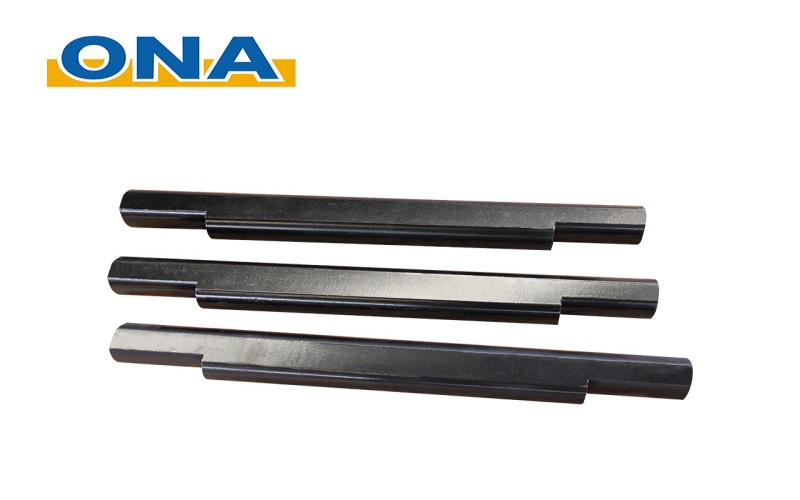
Wear and efficiency loss usually come from operating conditions rather than from one single part failure. Abrasive material increases contact stress on surfaces inside the crusher, especially where high-velocity impact is concentrated. High rotor speed can improve reduction, but it may also accelerate wear if the material is hard or the setup is not optimized. Uneven or unstable feeding creates imbalance, inconsistent chamber loading, and irregular product shape, while the wrong crushing configuration can push the machine away from its most efficient operating range.
These problems affect more than maintenance intervals. As wear increases or feed becomes unstable, output quality can become less consistent, fines may shift out of target range, and operating cost per ton may rise. In other words, poor wear control does not only shorten part life; it can also reduce the value of the final product.
A VSI crusher improves particle shape and produces high-quality manufactured sand for demanding projects. Its value depends on material, output goals, and wear conditions. Ma'Anshan ONA Intelligent Equipment Co., Ltd. provides reliable VSI crusher parts and professional support to help customers improve efficiency, reduce downtime, and achieve better crushing results. If you need help selecting the right VSI crusher parts for your application, contact us for more information and technical support.
A: A VSI crusher is used for shaping aggregate and producing manufactured sand with controlled gradation.
A: A VSI crusher accelerates feed with a high-speed rotor, then breaks it by impact instead of compression.
A: Choose a VSI crusher when final particle shape, sand production, or fine crushing quality matters most.
A: Key VSI crusher parts include the rotor, wear plates, tips, anvils, and bearings, which influence wear and output consistency.


