
- All
- Product Name
- Product Keyword
- Product Model
- Product Summary
- Product Description
- Multi Field Search


What does a vsi crusher actually do beyond breaking rock? Many readers want a practical answer, not just a definition. In this article, you will learn how a vsi crusher works, what makes it different, where it performs best, and how to judge whether it suits sand making, aggregate shaping, or rotor-related system needs.
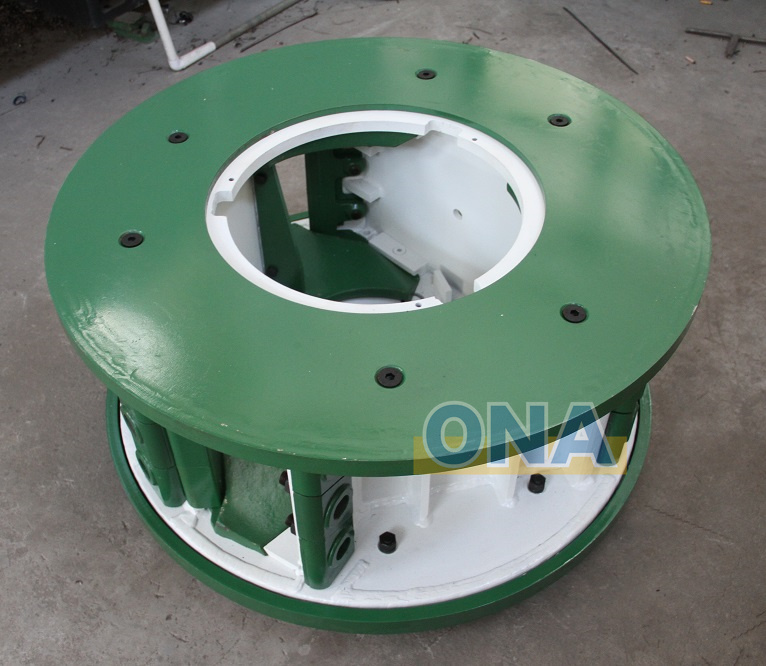
A VSI crusher—short for Vertical Shaft Impact crusher—is best understood as a shaping and fine-crushing machine rather than a primary rock breaker. In most production lines, it appears after earlier crushing stages, where feed has already been reduced to a manageable size. Its main job is to turn that feed into better-shaped aggregate or manufactured sand with tighter gradation and more consistent particle quality. That is why VSI systems are closely associated with sand making, aggregate shaping, and quality improvement in mining, quarrying, construction, and recycling applications. In practice, performance also depends heavily on rotor-related components such as feed tubes, wear parts, and rotor assemblies, since these parts control how material enters, accelerates, and impacts inside the chamber.
Unlike equipment built mainly for coarse reduction, a VSI crusher is designed to refine the final product. It produces fine, consistent material by accelerating rock at high speed and breaking it through impact. This makes it especially useful when the target is not just “smaller material,” but a better end product for concrete, asphalt, or high-quality manufactured sand.
The key difference is the crushing mechanism. Compression crushers squeeze material between surfaces; a VSI crusher throws material outward from a high-speed rotor so it fractures on impact against anvils, a rock bed, or other particles. That high-velocity action helps break rock along natural fault lines instead of forcing it into flatter, more elongated fragments. In operating terms, this often means better particle shape, more controllable fines production, and a more uniform finished product.
Feature | VSI Crusher | Compression Crusher |
Main crushing force | High-speed impact | Squeezing/compression |
Typical role | Tertiary shaping and sand making | Primary or mid-stage reduction |
Usual particle result | More cubical and even | More angular or elongated |
Output control | Influenced by rotor speed and impact setup | Influenced by chamber and closed-side setting |
Particle shape directly affects downstream performance. Cubical aggregate packs more efficiently, which supports better concrete workability and more stable asphalt mixes. In manufactured sand applications, shape and gradation often decide whether the material can be used in higher-grade concrete or only in lower-value work. For buyers, that means crusher choice influences not only output size, but also the value and usability of the final product.
In actual production, a VSI crusher follows a simple but high-energy path. Material first enters through the center feed opening and drops into the rotor. As the rotor spins at high speed, it accelerates the feed outward and throws it into the crushing chamber. The first break happens when those particles strike either a metal anvil or a bed of material already built up inside the chamber. From there, the process does not end with one hit. Fragments collide again with other particles and chamber surfaces, creating repeated impact and attrition before the finished material leaves through the bottom discharge. This is why a VSI is often described as both a crushing and shaping machine: reduction and particle refinement happen in the same flow path rather than in separate steps.
A practical way to understand the process is to follow the material in sequence:
● Feed entry: pre-crushed material enters from the top through the feed tube
● Rotor acceleration: the rotor picks up the feed and throws it outward at high velocity
● Primary impact: particles strike the chamber edge, anvils, or a rock lining
● Secondary breakage: fractured pieces hit each other and continue to break
● Discharge: once reduced to the target range, material exits through the lower opening
This impact-led path explains why VSI crushers are usually placed in later-stage crushing. They are not mainly designed to swallow very large feed, but to turn already-sized material into more uniform sand or shaped aggregate. Feed moisture, consistency, and whether the chamber stays evenly loaded all influence how efficiently this cycle works.
The two most common operating modes are rock-on-rock and rock-on-steel. In rock-on-rock crushing, material hits a built-up layer of aggregate rather than directly striking metal. This usually lowers wear costs and is often preferred for abrasive stone or when particle shape is the priority. In rock-on-steel mode, particles strike metal anvils, which usually increases reduction ratio and produces more fines, but also raises wear on impact parts. That makes the choice operational, not merely technical: plants balancing wear life, target gradation, and finished shape may switch configuration depending on raw material and output requirements.
Crushing mode | Main impact surface | Best fit | Typical trade-off |
Rock-on-rock | Material bed / rock shelf | Abrasive material, shaping, lower wear | May need more recirculation or speed |
Rock-on-steel | Metal anvils | Higher reduction, more fines | Higher wear on metal parts |
Final output is controlled less by a single setting than by the interaction of several variables. Rotor speed is the most direct lever, because changing it shifts particle velocity and therefore the amount of breakage. Feed size also matters: oversized or uneven feed can reduce shaping efficiency and destabilize gradation. Feed consistency is equally important, since a fluctuating material curtain can change the impact pattern inside the chamber. Chamber setup adds another layer, especially when operators choose between center feed, cascade feed, rock-on-rock, or rock-on-steel arrangements. The condition of key parts also matters in day-to-day production. Worn rotor tips, damaged anvils, or an imbalanced rotor assembly can all change product shape, increase fines unpredictably, and reduce consistency across the shift.
A VSI crusher is most closely associated with applications where the final product matters as much as the reduction itself. In practical terms, that means it is usually selected when a plant needs shaped aggregate, controlled fines, or manufactured sand rather than simple coarse crushing. VSI equipment can handle both soft and hard materials, but delivers the most noticeable value when product shape, gradation, and particle consistency directly affect downstream performance.
The strongest use case for a VSI crusher is sand making. Unlike machines that mainly reduce size, a VSI is designed to create fine material with a more controlled grading curve and a more cubical shape. That difference is important in manufactured sand production because fine aggregate quality is not judged by size alone. Shape, fines distribution, and consistency all influence whether the finished material performs well in concrete and mortar. Rotor speed can also be adjusted to influence the amount of fines, which makes the VSI especially useful when a plant needs tighter control over final sand quality.
In concrete and asphalt applications, a VSI crusher is valued less for raw crushing power and more for the shape improvement it brings to the finished aggregate. By breaking material through impact rather than compression, it tends to produce more cubical particles with fewer flat or elongated pieces. That improves packing, supports better workability in concrete mixes, and suits asphalt applications where consistent aggregate geometry is important for compaction and surface performance.
Application area | Why VSI is used |
Manufactured sand | Produces fine aggregate with controlled gradation and better particle shape |
Concrete aggregate shaping | Improves cubicality and consistency for higher-value end use |
Asphalt aggregate production | Creates well-shaped particles suited to dense, stable mixes |
Recycling and industrial feed | Handles selected recycled or abrasive materials where shaping still matters |
Beyond sand and aggregate production, VSI crushers are also used in selected recycling and industrial applications. These include glass, slag, asphalt, concrete, and several abrasive mineral materials when a finer or better-shaped output is required. These are not always the highest-volume uses, but they show how versatile the machine can be when impact crushing offers an advantage over compression methods.
A VSI is less suitable when the feed is too large, too sticky, or too poorly prepared for stable rotor feeding. It is also not the first choice for plants focused only on coarse reduction, because that job is usually handled more efficiently upstream. Feed opening limits, moisture-related stickiness, and rotor imbalance risks from unsuitable material make proper feed preparation a practical requirement rather than a minor operating detail.
Choosing a VSI crusher is less about whether the machine can crush material and more about whether it can create the kind of finished product your market actually rewards. In many plants, the real issue is not tonnage but particle quality. A crusher may hit production targets and still produce sand or aggregate that sells at a discount because the shape is too flaky, the gradation is unstable, or the fines are not suitable for higher-value concrete use. VSI technology is most effective when the plant is targeting manufactured sand, tighter particle shape control, or a premium aggregate product rather than simple bulk reduction. It is typically used after primary or secondary crushing, where feed has already been prepared for shaping and fine crushing.
A VSI crusher makes the strongest case when the target product is manufactured sand or another fine aggregate whose value depends on shape and consistency. In that setting, compression-based crushing can create acceptable size reduction but still fall short on particle form. A VSI changes that equation because impact crushing tends to create more cubical particles, lower flakiness, and a more controllable fineness range. That matters when the end user is a concrete producer, asphalt plant, or any buyer that places a premium on uniform grading and workability. It also makes sense when the plant does not need another mid-stage reduction machine, but specifically needs a shaping machine that improves the saleability of existing fines or pre-crushed feed.
The most useful comparison is not which crusher is “better” overall, but which one is better for the job at hand.
Crusher type | Best role in the circuit | Typical product result | Best choice when |
Jaw crusher | Primary crushing | Coarse reduction from large feed | The plant must break down large rock first |
Cone crusher | Secondary or tertiary reduction | Smaller aggregate with less shape control | The priority is volume and staged reduction |
VSI crusher | Final shaping, fine crushing, sand production | More cubical, better-shaped fines and aggregates | Product value depends on shape, gradation, or M-sand quality |
This framework keeps the decision practical. A jaw crusher handles the first break. A cone crusher is efficient for intermediate reduction. A VSI crusher becomes the logical option when the final product must be refined, shaped, or upgraded for a better market position.
The main advantage of a VSI crusher is product quality. It can improve particle shape, raise the value of manufactured sand, and help a plant deliver a more consistent output. But that advantage comes with conditions. Feed size is more limited than with primary machines, sticky or poorly prepared material can reduce efficiency, and wear-part condition has a direct effect on performance. High-speed rotors also require balance and timely replacement of wear components to keep output stable. For buyers assessing ONA rotor assemblies or other rotor-related parts, this is an important consideration: the machine’s result depends not just on crusher type, but on whether core components can support reliable impact crushing over time. A VSI is usually the right choice when the plant is prepared to control feed, maintain key parts, and prioritize finished-product quality over simple coarse reduction.
A VSI crusher is best seen as a shaping and sand-making machine that delivers more consistent, cubical material through high-speed impact. When output quality and manufactured sand performance matter, it is often the right choice. Ma' Anshan ONA Intelligent Equipment Co., Ltd. adds value by supporting VSI systems with reliable rotor-related components and practical service for stable production.
A: A vsi crusher is used for sand making, fine crushing, and aggregate shaping.
A: A vsi crusher uses a high-speed rotor to break material through impact, not compression.
A: Choose a vsi crusher when cubical shape, consistent gradation, or manufactured sand quality matters.
A: Yes, a vsi crusher can process hard rock when feed size and wear-part control are managed properly.


