
- All
- Product Name
- Product Keyword
- Product Model
- Product Summary
- Product Description
- Multi Field Search

Views: 0 Author: Site Editor Publish Time: 2026-03-09 Origin: Site


Why does sand quality drop when the crusher still runs? Often, the real issue is not the machine itself, but worn vsi crusher wear parts. These parts affect output, particle shape, stability, and maintenance needs. In this article, you will learn which parts matter most, how they affect sand making, and how to choose and manage them well.
In a VSI crusher, sand quality is shaped by impact, not compression. Material is accelerated by a high-speed rotor and thrown against anvils or a rock bed, so the wear parts inside the crushing chamber are not passive protective pieces; they directly influence how the feed moves, how evenly it is distributed, and how consistently particles break. That is why wear condition has a visible effect on particle shape, gradation, and the overall uniformity of manufactured sand. When key parts such as rotor tips, the distributor cone, and the feed tube are still within their effective wear range, the crusher can maintain a more stable material trajectory and produce the cubical, well-graded output that sand-making lines aim for.
Once these parts begin to wear beyond their intended profile, quality usually drops before the machine reaches a full failure point. A worn feed tube can let material splash instead of entering the rotor cleanly, while a worn distributor cone can upset feed balance across the rotor outlets. Rotor tips are even more sensitive: because they absorb the most direct impact, excessive wear changes the crushing force and weakens rotor protection at the same time. In practice, this means operators may first notice inconsistent finished sand, a broader size spread, or a gradual loss of particle shape before they see a major stoppage.
Wear does not only affect product quality; it also changes the economics of the whole crushing circuit. As wear progresses, material flow becomes less controlled, which can reduce throughput and increase internal recirculation. Uneven feeding also creates rotor imbalance and vibration, accelerating abnormal wear on bearings and other components. The result is a chain reaction: lower production efficiency, more frequent interruptions, and higher maintenance demand.
Wear condition | Likely operational effect | Cost consequence |
Rotor tips losing profile | Weaker particle acceleration and less stable crushing action | Lower output and faster secondary wear |
Distributor cone wearing unevenly | Poor feed distribution across the rotor | Inconsistent gradation and reduced productivity |
Feed tube heavily worn | Material splash and added stress on nearby parts | More repairs and earlier component replacement |
Chamber liners losing protection | More uncontrolled impact inside the chamber | Higher maintenance frequency and downtime |
A useful way to think about vsi crusher wear parts is that they affect two cost layers at once: the immediate cost of replacement and the larger hidden cost of lost efficiency. Poor wear-part condition raises cost per ton not only because parts must be changed, but because unstable material flow, extra vibration, and quality drift make every ton of sand more expensive to produce.
Among all VSI crusher components, rotor tips usually face the earliest and most severe wear because they sit at the point where accelerated material leaves the rotor at high speed. In practical terms, they are the first parts to absorb repeated impact from abrasive stone, which is why they are often treated as the most critical wear item in sand-making duty. Their job is not only to survive impact, but to maintain the intended discharge angle and energy transfer as material is thrown into the crushing chamber. When the tip profile stays within its working range, the crusher can keep material acceleration more stable and preserve a more consistent crushing action.
Once rotor tips wear too far, the effect is larger than simple material loss. The rotor no longer throws feed with the same force or control, which weakens crushing efficiency and can expose the rotor body to direct damage. This is why many heavy-duty tip designs use high-wear materials such as tungsten-based inserts: the goal is to protect both productivity and the more expensive rotor structure behind them. In day-to-day operation, tip wear often shows up as a gradual drop in shaping performance, less stable output, and a higher risk of secondary damage if replacement is delayed.
If rotor tips determine how material exits the rotor, the distributor cone and feed tube shape how it enters. The distributor cone sits at the rotor center and spreads incoming material toward the outlet paths, while the feed tube guides material into the rotor in a controlled, central stream. This pairing matters because VSI crushing depends on balanced flow as much as it depends on impact speed. A stable feed pattern supports even loading, better rotor balance, and more predictable wear across the chamber. The feed tube is especially important because once it wears excessively, material can start splashing or drifting off path before it is properly accelerated, which adds stress to nearby components and weakens overall crushing stability.
Irregular feed distribution creates a chain reaction rather than a single fault. When material no longer enters evenly, wear becomes concentrated on specific rotor outlets and nearby liners, vibration can increase, and the plant may start losing efficiency without an obvious breakdown. This is one reason feed tubes and distributor components are often evaluated not just by hardness, but by fit accuracy and compatibility with the rotor assembly. In sand-making lines handling abrasive stone, stable central feeding is part of maintaining both product quality and acceptable wear life.
Wear part | Primary function | What changes when it wears |
Rotor tips | Transfer impact energy and protect the rotor body | Lower material acceleration, weaker crushing force, higher rotor exposure |
Distributor cone | Spread feed evenly toward rotor outlets | Uneven feed pattern, output imbalance, localized wear |
Feed tube | Guide material centrally into the rotor | Material splash, unstable feeding, added stress on adjacent parts |
Impact liners / wear plates | Shield the chamber and stabilize the crushing zone | More uncontrolled impact, reduced chamber stability, higher maintenance load |
Impact liners and wear plates are sometimes treated as purely protective components, but in a VSI crusher they also help preserve the working geometry of the crushing chamber. In rock-on-metal arrangements, the material strikes these surfaces directly; in rock-on-rock configurations, they support the zone where a protective material bed forms. Either way, they help maintain a stable crushing environment rather than simply absorbing damage. When these parts remain in good condition, internal flow paths stay more predictable and the crusher can operate with less disruptive turbulence inside the chamber.
In abrasive conditions, liner wear becomes more than a maintenance issue because it changes how material moves after impact. As protective surfaces lose thickness or shape, material contact becomes less controlled, chamber stability declines, and wear on surrounding components can accelerate. This is why wear plates and cavity protection parts are usually selected with close attention to wear resistance, dimensional accuracy, and suitability for the specific operating conditions of sand making or mining crushing duty.
Choosing VSI wear parts starts with the material being crushed, not with the price list. In sand-making applications, abrasive stone such as quartz-rich feed, granite, or other hard aggregates can wear out standard components much faster than softer material. That is why high-wear zones usually need stronger alloys or reinforced designs to maintain service life under continuous impact. The same logic applies to parts that control material entry and chamber protection. Feed tubes, distributor components, and wear plates all face different wear patterns, so their material choice should reflect the actual duty they perform inside the crusher. A part that looks acceptable on paper may fail early if it is not designed for the abrasiveness, throughput, and feed consistency of the line.
This is especially important for high-wear components such as feed tubes and wear plates. A feed tube must guide material into the rotor cleanly while resisting abrasive erosion, and heavy wear can quickly lead to spillage and extra stress on nearby parts. Wear plates face repeated chamber contact, so poor material selection can shorten maintenance intervals and disrupt production stability. In practice, the right choice is the one that matches real operating conditions, including feed hardness, machine setup, and target output, rather than the one with the lowest initial quote.
A low purchase price can be misleading in VSI operation because the visible cost of a part is only one part of the equation. The more important question is how that part performs over a full operating cycle: how long it lasts, how often it must be replaced, whether it protects adjacent components, and how much downtime it creates when wear accelerates. Better wear resistance and more precise manufacturing often mean a higher upfront price, but they can also reduce emergency shutdowns, stabilize output, and lower cost per ton over time. The best value usually comes from the part that keeps the plant running efficiently, not the one that is cheapest on the day of purchase.
Selection factor | What to evaluate | Why it matters |
Feed material | Abrasiveness, hardness, consistency | Determines required wear resistance and expected service life |
Lifecycle value | Replacement frequency, downtime, cost per ton | Shows whether a cheaper part is actually more expensive over time |
Fit and balance | Dimensional accuracy and matched installation | Affects rotor stability, vibration, and secondary wear |
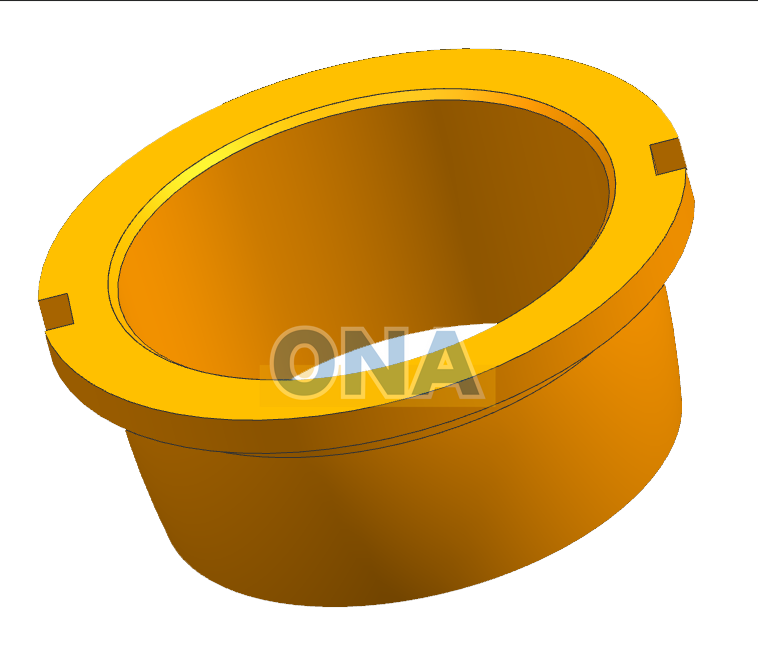
In a high-speed VSI crusher, fit and balance are just as important as material grade. Components that are not made to the right tolerance can affect alignment, create vibration, and reduce crushing stability. Poorly matched wear parts may also upset rotor balance, which increases abnormal wear on bearings and surrounding components. That is why compatibility is often checked first for model-specific items such as ONA feed tubes or matched wear plates: if the part does not fit the crusher and its operating profile correctly, even a durable alloy may not deliver reliable results.
A useful maintenance plan for a VSI crusher should begin with the parts that absorb the highest impact, not with a uniform checklist applied equally to every component. Rotor tips, feed tubes, distributor components, and chamber protection parts wear at different rates because they handle different stresses inside the machine. In practice, this means inspections should focus first on the areas most likely to affect crushing stability and to expose expensive assemblies if wear goes too far. Frequent monitoring of rotor tips is critical, because waiting until the wear-resistant insert is fully consumed can lead to damage to the rotor body itself. Feed tubes should also be replaced before excessive wear causes material splash and added stress around the rotor zone.
Early detection matters because VSI wear problems rarely stay isolated. Once feed no longer enters cleanly, or once the rotor loses its intended protection, secondary wear often accelerates on nearby parts. That is why an inspection routine should be tied to actual wear behavior during production rather than fixed only by calendar intervals. In high-throughput sand-making lines, visible wear, vibration changes, and unstable discharge quality often provide earlier warning than a complete mechanical fault.
The most effective wear-life improvements are usually simple operating habits rather than major design changes. Reversible rotor-tip designs are one example: when tips are turned or rotated at the right wear stage, service life can be significantly extended without changing the crushing process. The same principle applies more broadly to any eligible part with a usable second edge or balanced replacement pattern. Regular monitoring also supports better timing, so parts are rotated before the wear profile starts reducing crushing efficiency.
Two additional habits make a large difference in daily operation:
● Keep feed continuous and centered to avoid rotor imbalance and abnormal wear.
● Match wear-part grade to abrasive feed so vulnerable parts do not fail early under high-impact duty.
These actions are practical because they improve both wear life and process stability at the same time. Uneven loading does not just shorten component life; it also increases vibration and can accelerate bearing and liner damage.
Maintenance focus | What to watch for | Why it matters |
Rotor tips | Rapid profile loss or worn insert area | Protects the rotor body and maintains crushing force |
Feed tube | Wear at the lower lip or unstable central feeding | Prevents material spillage and extra rotor stress |
Replacement pattern | Single-part swaps on balanced assemblies | Reduces the risk of rotor imbalance and vibration |
Feed consistency | Surging or uneven loading | Helps avoid abnormal wear on bearings and liners |
Replacement should be based on performance signals, not only on how long a part has been installed. Declining output, worsening particle shape, stronger vibration, and irregular wear patterns are all signs that wear parts are no longer supporting efficient crushing. Dynamic balance during replacement is also important: parts should often be changed in pairs or sets so the rotor remains balanced in operation. Delaying replacement too long may appear economical in the short term, but once wear begins to affect feed control, rotor protection, or chamber stability, the resulting downtime and secondary damage usually cost more than timely part changes.
In sand making, vsi crusher wear parts directly affect product quality, output, and cost. Better results come from choosing the right parts, matching them to working conditions, and replacing them before wear reduces efficiency. Ma' Anshan ONA Intelligent Equipment Co., Ltd. adds value with durable wear parts, stable fit, and support for reliable performance in sand, aggregate, and mining applications.
A: vsi crusher wear parts such as rotor tips, feed tubes, and wear plates most directly affect particle shape, gradation, and crushing stability.
A: Replace vsi crusher wear parts based on wear pattern, output decline, vibration, and feed instability rather than fixed calendar intervals.
A: Buyers should verify material grade, fit, rotor balance, and compatibility, because vsi crusher wear parts must match feed conditions and crusher setup.


