
- All
- Product Name
- Product Keyword
- Product Model
- Product Summary
- Product Description
- Multi Field Search


Did you know that the right jaw plate can significantly improve your crusher's performance?
In this article, we will dive into the different types of jaw plates, their advantages, and how to select the ideal one for your needs. You’ll discover how choosing the right jaw plate can enhance efficiency and reduce costs.
Jaw plates are integral parts of jaw crushers, a key piece of equipment used in many industries for material reduction. These plates are typically made of high-strength materials such as manganese steel and are designed to withstand the compressive forces exerted during crushing operations. When materials are fed into a jaw crusher, the stationary and moving jaw plates work together to create a compressive force that breaks the material down.
The stationary jaw plate, which is fixed, remains in place, while the moving jaw plate oscillates back and forth during operation. This movement forces the material between the two plates, causing it to break into smaller pieces. Jaw plates are essential for maintaining the operational efficiency of the crusher, and their design directly affects the quality and consistency of the crushed material.
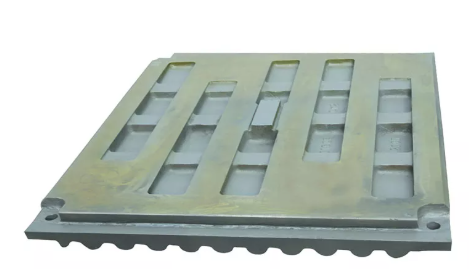
Jaw plates play a pivotal role in determining how well a jaw crusher performs. As the moving jaw plate moves, it exerts force on the material, pushing it into the stationary jaw plate. This force causes the material to fracture, reducing its size. The gap between the jaw plates is adjustable, which allows operators to control the size of the output material.
One important aspect of jaw plates is their wear resistance. Over time, the material being crushed wears down the surface of the jaw plates. To maintain efficient crushing performance, it’s essential to regularly inspect the jaw plates for signs of wear, such as cracks, chipping, or surface deterioration. By monitoring and replacing jaw plates when necessary, crusher efficiency can be preserved, and costly repairs can be avoided.
The materials used to manufacture jaw plates are selected based on the type of material being crushed and the level of durability required. Manganese steel is the most commonly used material for jaw plates because of its excellent resistance to wear and impact. It is particularly effective when crushing tough, abrasive materials like granite, basalt, and ores.
High-chrome steel is another material that is sometimes used for jaw plates, especially in applications where high abrasion resistance is needed. It is typically more resistant to wear than manganese steel but is less tough, making it more suitable for crushing softer materials.
In some cases, alloy steel may be used for jaw plates, especially when strength and toughness are crucial. Alloy steel jaw plates can offer a good balance between wear resistance and toughness, making them versatile in various applications.
Smooth jaw plates are flat and feature a consistent surface without any prominent teeth or ridges. They are ideal for crushing softer materials that do not have excessive abrasiveness. When materials like limestone, gypsum, or coal are processed, smooth jaw plates help ensure that the crushing process is efficient and consistent, providing a fine product output.
Smooth jaw plates are often preferred in applications where high throughput is required, as they allow for a more uniform crushing motion. The lack of teeth results in lower wear rates when dealing with non-abrasive materials, which ultimately translates into lower operational costs. However, smooth plates are not as effective when it comes to processing harder, more abrasive materials, as they lack the grip needed to exert sufficient crushing force.
Advantages of Smooth Jaw Plates:
Lower wear rates: Smooth plates experience less abrasion when handling softer materials, reducing the frequency of replacement and minimizing maintenance costs over time, making them more reliable.
Increased throughput: The smooth surface allows for smoother, more continuous crushing, reducing friction and enhancing material flow, which leads to higher output and efficiency in processing.
Cost-effectiveness: The simple design and material composition of smooth jaw plates make them a more affordable choice, offering great value for businesses focused on crushing softer materials.
Toothed jaw plates feature a series of teeth along their surface, designed to provide additional grip and force during crushing. These plates are particularly effective when processing harder and more abrasive materials, such as granite, basalt, and ores. The teeth increase the crushing pressure, allowing the material to be broken down more efficiently.
Toothed jaw plates are often used in applications where a high degree of force is required to break down tough materials. The ridged surface ensures that the material is securely gripped and crushed more effectively than smooth plates could achieve. However, the teeth on the jaw plates result in higher wear rates, which means they may need to be replaced more frequently.
Advantages of Toothed Jaw Plates:
● Improved crushing performance: The teeth on the jaw plates provide better grip, helping to break down tough, abrasive materials more effectively and ensuring consistent material reduction throughout the process.
● Higher crushing force: The tooth design generates more pressure, enhancing the force applied during crushing, which results in more efficient material breakdown and improved overall crushing productivity.
● Better for challenging materials: Toothed plates are particularly effective when crushing tough materials like ores, rocks, and concrete, providing superior performance in high-demand, heavy-duty applications where other plates might struggle.
Heavy-duty jaw plates are designed for the most demanding crushing applications. These plates are thicker and stronger than regular jaw plates, capable of withstanding extreme impact forces and handling high-load crushing operations. Heavy-duty jaw plates are typically used in industries such as mining, quarrying, and recycling, where large, hard materials need to be crushed continuously.
These plates are often made from high-quality manganese or alloy steels, ensuring that they can withstand the harshest conditions. Their increased thickness and strength also result in longer lifespans, making them a cost-effective solution in high-volume crushing environments.
Advantages of Heavy Duty Jaw Plates:
Extreme durability: Heavy-duty plates are specifically designed to withstand harsh, high-impact conditions, ensuring a longer lifespan and reducing the frequency of costly replacements, even under challenging crushing environments.
Ability to handle large materials: The robust design of heavy-duty plates allows them to efficiently crush larger, tougher materials, making them indispensable in demanding applications such as mining and large-scale industrial crushing operations.
High-load tolerance: The increased thickness and reinforced structure of heavy-duty plates enable them to endure significant loads, providing reliability and consistent performance in high-volume operations that require continuous, heavy-duty crushing.
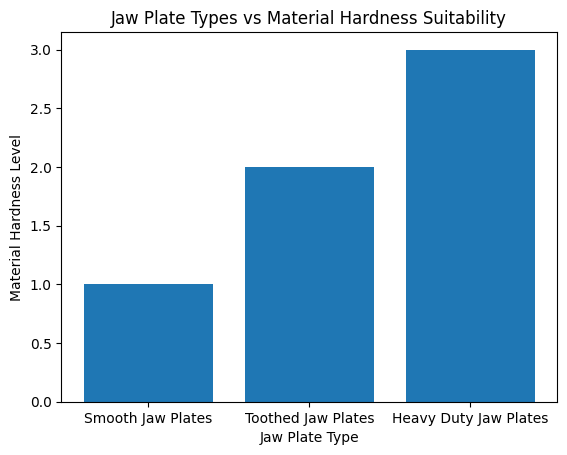
When comparing smooth jaw plates to toothed jaw plates, the most significant differences lie in the material hardness and the crushing efficiency. Smooth jaw plates are better suited for softer materials, while toothed jaw plates excel in processing harder and more abrasive substances.
Feature | Smooth Jaw Plates | Toothed Jaw Plates |
Material | Soft materials | Harder materials |
Wear Resistance | Lower wear rates | Higher wear rates |
Crushing Efficiency | Higher throughput for soft materials | Better for tough materials |
Cost | Lower | Higher |
Cost-effectiveness and durability are key considerations when selecting jaw plates. Smooth jaw plates are generally more affordable and suitable for softer materials, but they may not be durable enough for harder materials. Toothed and heavy-duty jaw plates, while more expensive, provide better performance in challenging environments, making them a better long-term investment for high-volume operations.
Custom jaw plates are specifically designed to meet the unique needs of each application. For example, a mine may need specialized jaw plates to crush particularly tough ores, while a recycling plant may require plates optimized for concrete and metal processing. By addressing these specific requirements, custom jaw plates enhance crushing efficiency and extend the lifespan of the equipment.
Advantages of Custom Jaw Plates:
Tailored to specific applications: Custom plates are designed to meet the demands of various materials, improving overall crushing performance and efficiency.
Increased efficiency:Optimizing jaw plate design reduces downtime and maximizes throughput, leading to more effective and streamlined operations.
Cost savings: Although custom jaw plates have a higher upfront cost, they offer long-term savings through enhanced performance, reduced wear, and a longer lifespan.
The process of designing custom jaw plates begins with a thorough analysis of the materials to be crushed and the conditions under which the crusher will operate. Manufacturers collaborate with operators to select the right materials, ensure the appropriate tooth design or smooth surface, and determine the ideal thickness and strength of the plates. Custom plates can include reinforced teeth or wear-resistant coatings, further enhancing durability and performance. Customization allows businesses to adapt jaw plates to specific production goals, ensuring higher efficiency and reduced wear rates during crushing.
Regular inspection is crucial for maintaining the efficiency and longevity of jaw plates. Monitoring for signs of wear, such as cracks, surface degradation, or uneven wear patterns, helps identify when jaw plates need to be replaced or repaired. Early detection of wear allows operators to replace the plates before they cause further damage to the crusher, preventing unexpected breakdowns, costly repairs, and potential damage to other components. Regular inspection ensures that the crusher operates at optimal performance, reducing downtime and maintaining consistent productivity throughout its lifecycle.
Cleaning and reconditioning jaw plates is essential to extend their lifespan and improve overall performance. Over time, material buildup, such as concrete, dirt, and dust, can affect the crushing efficiency of the plates by reducing the space between the plates and hindering proper material flow. Regular cleaning removes these deposits, ensuring the plates function smoothly. Reconditioning involves restoring the jaw plates to their original condition by resurfacing or re-shaping the contact surfaces, effectively addressing wear and tear. This maintenance practice helps reduce costs and prolongs the service life of the plates, enhancing crusher performance.
In conclusion, selecting the right jaw plate is critical for achieving efficient and cost-effective crushing operations. By understanding the different types of jaw plates available and their specific applications, businesses can make informed decisions that optimize their crusher performance. Whether you choose smooth, toothed, or heavy-duty plates, regular inspection, cleaning, and customization can significantly extend the lifespan of the plates and enhance overall productivity. For high-quality jaw plates and tailored solutions, reach out to Ma'Anshan ONA Intelligent Equipment Co., Ltd. and discover how our products can help maximize your crushing efficiency. Feel free to inquire about our range of jaw plates for your specific needs!
A: A jaw plate for a crusher is a metal component that is fixed to the moving and stationary parts of a jaw crusher. It helps in crushing materials by applying pressure and breaking down rocks and ores. Jaw crusher plates come in various materials like manganese steel for better durability.
A: The most common types of jaw plates include smooth jaw plates, toothed jaw plates, and heavy-duty jaw plates. Smooth plates are used for softer materials, while toothed plates are suitable for harder, more abrasive materials. Heavy-duty plates handle high-load applications.
A: Manganese jaw crusher plates are preferred due to their high wear resistance and toughness, making them ideal for crushing hard materials. The material ensures that the plates last longer and maintain their efficiency over time.
A: Jaw plates for crushers play a key role in determining how effectively materials are crushed. The plate's design, such as its smoothness or tooth pattern, affects the crusher’s throughput, wear rate, and material handling capabilities, ensuring efficient operation.
A: Jaw crusher plates for sale can be found through manufacturers, distributors, or online platforms specializing in industrial equipment. Make sure to choose high-quality plates made from durable materials like manganese steel to ensure better performance and longevity.
